"How might we ensure that potential patients aged 50-80 in underserved communities have access to early lung cancer screening?"
Overview
Partnering with the Cedars-Sinai Cancer Research Center at ArtCenter College of Design, I led the design of a kiosk, mobile voice interface to improve accessibility for underserved communities in early screenings.
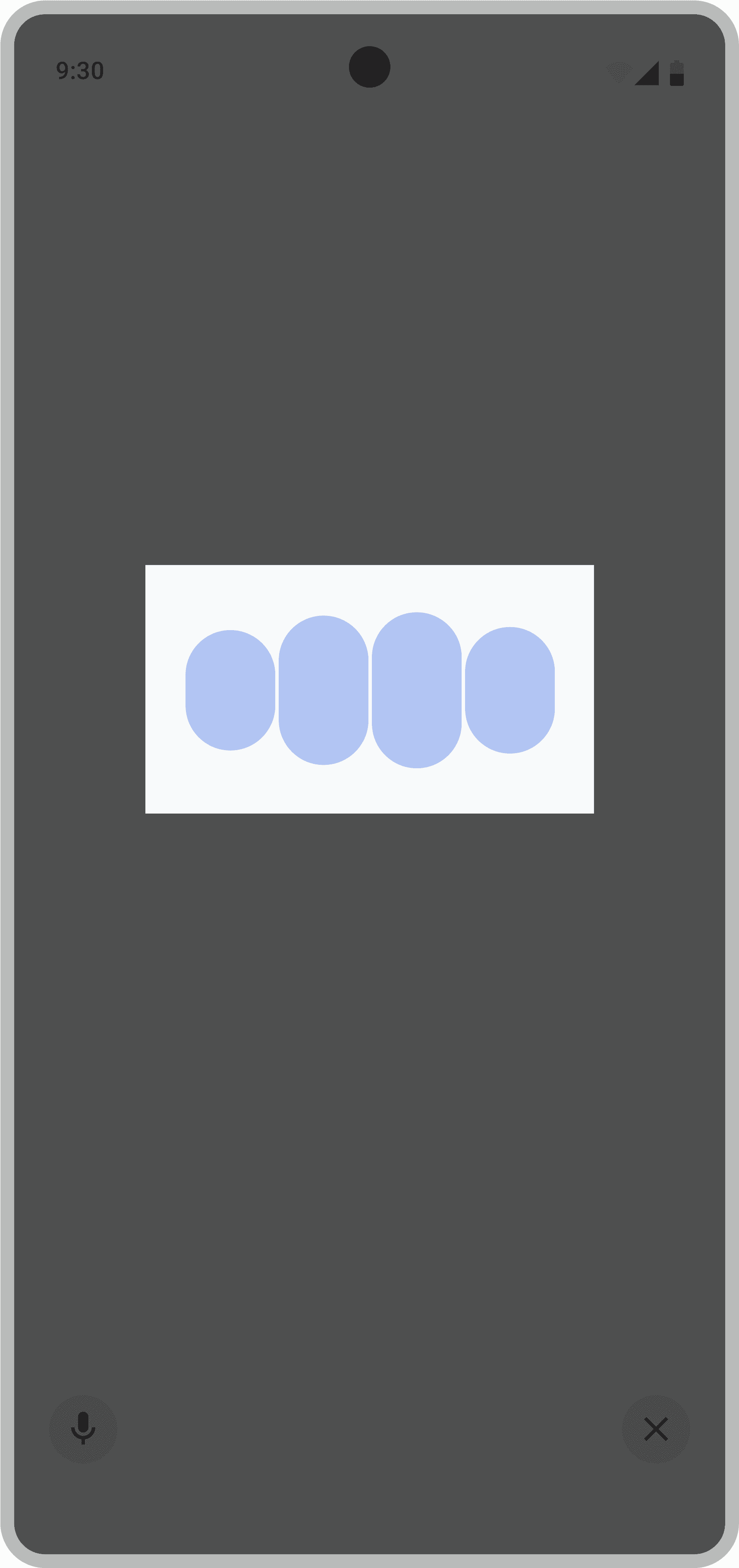
Waiting
Listening
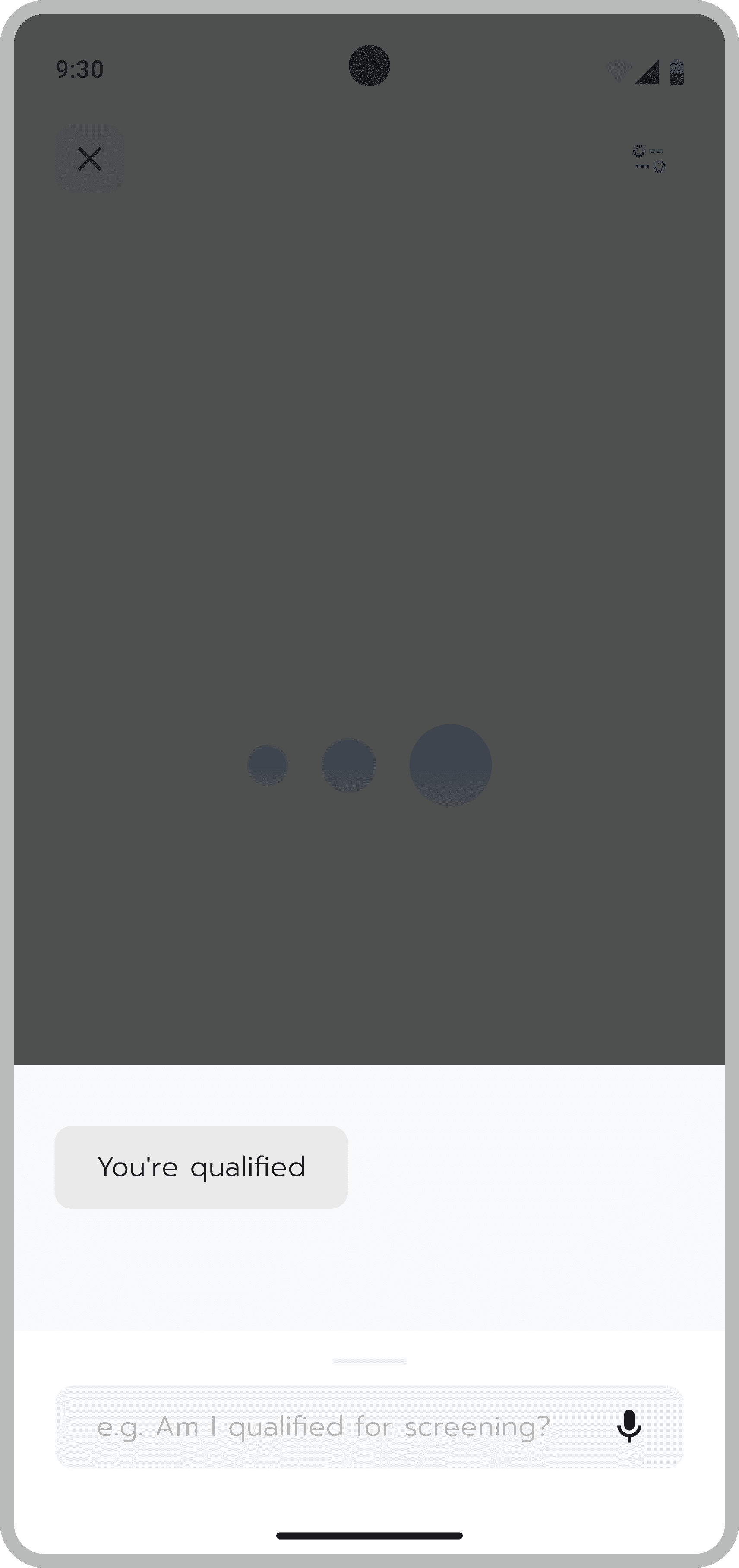
Thinking
Speaking
Success metrics
10%
“
Our goal for this campaign is to raise lung cancer screening rates by 10% and build annual patient retention.” — Cedars-Sinai
2025
Cedar-Sinai mobile lung cancer screening van and campaign are set to launch in Los Angeles and Orange Counties in 2025.
"How might we ensure that underserved adults aged 50-80have access to lung cancer screening?"
Insights synthesis
We interviewed 18stakeholders from Cedars-Sinaiand Kheir Clinic, formed behavioral groups through affinity mapping, and identified 3 key pain points among patients and healthcare professionals.
Key insight 01
Key insight 01
Limited education, health literacy among underserved populations.
Limited education and health literacy among underserved populations.
Limited education and health literacy among underserved populations.
"
I don’t have time to go to the clinic when I’m not sick."
Key insight 02
Key insight 02
Patients withhold health history due to language, distrust, stigma.
Patients withhold health history due to language barriers, distrust, stigma.
Patients withhold health history due to language, distrust, stigma.
"
When asked how many cigarettes they smoke, they often answer much fewer."
Key insight 03
Key insight 03
High patient drop-off from complex screening process.
Patient drop-off from screening process due to system complexity.
Patient drop-off from screening process due to system complexity.
"
It takes a lot of effort to go to a PCP clinic appointment in the first place."
Service blueprint
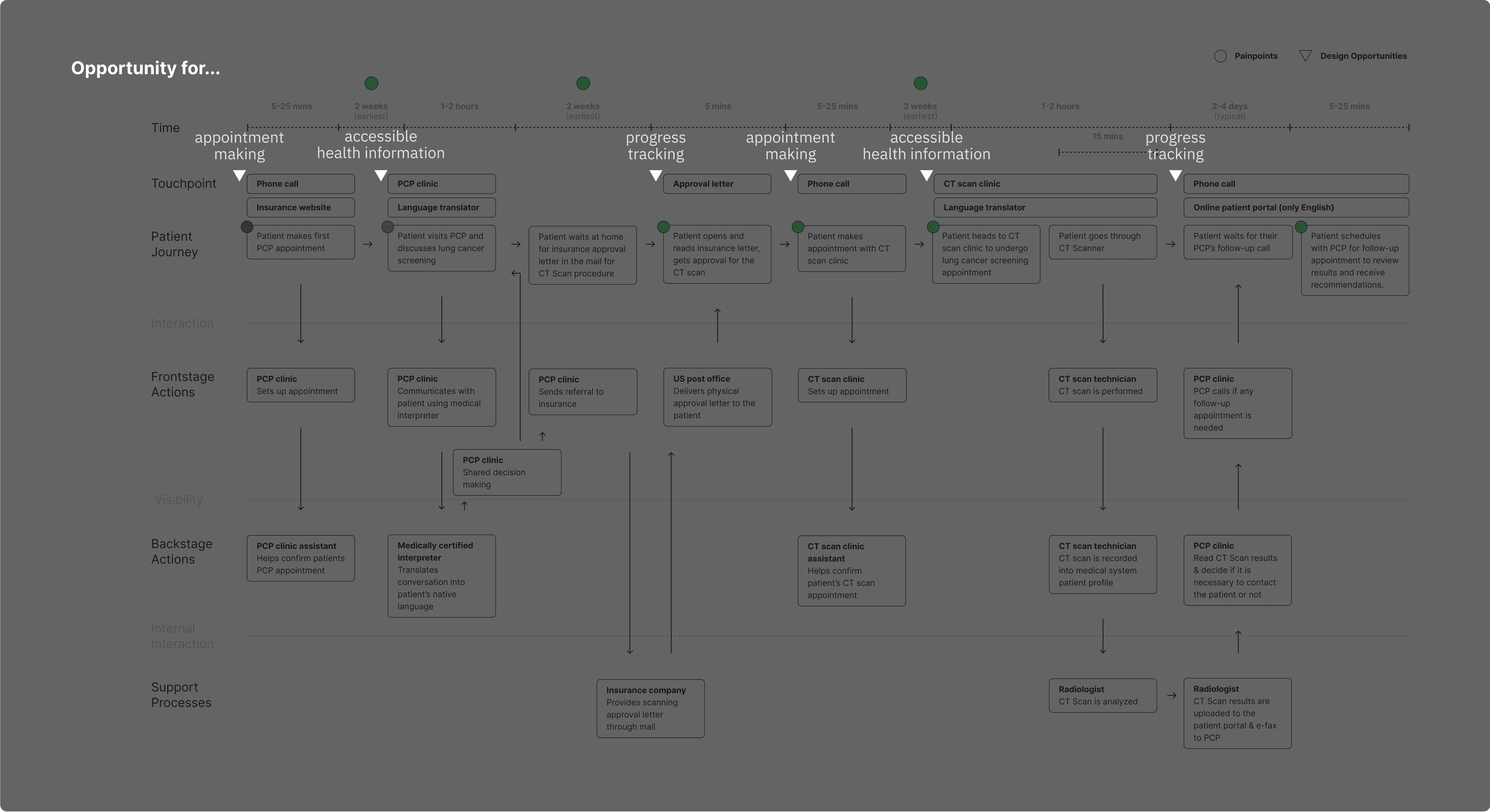
We uncovered 3 key opportunities for design intervention: intuitive appointment making, accessible health information to build trust during patient-provider discussions, and a tracking system to prevent drop-off.
Challenge refocus
"How might we develop an efficient system that increase health literacy, and build trust across multiple target audiences?”
(Latinx, African American, LGBTQ+, and Korean populations)
Solution 01
Build trust and health literacy through community voices
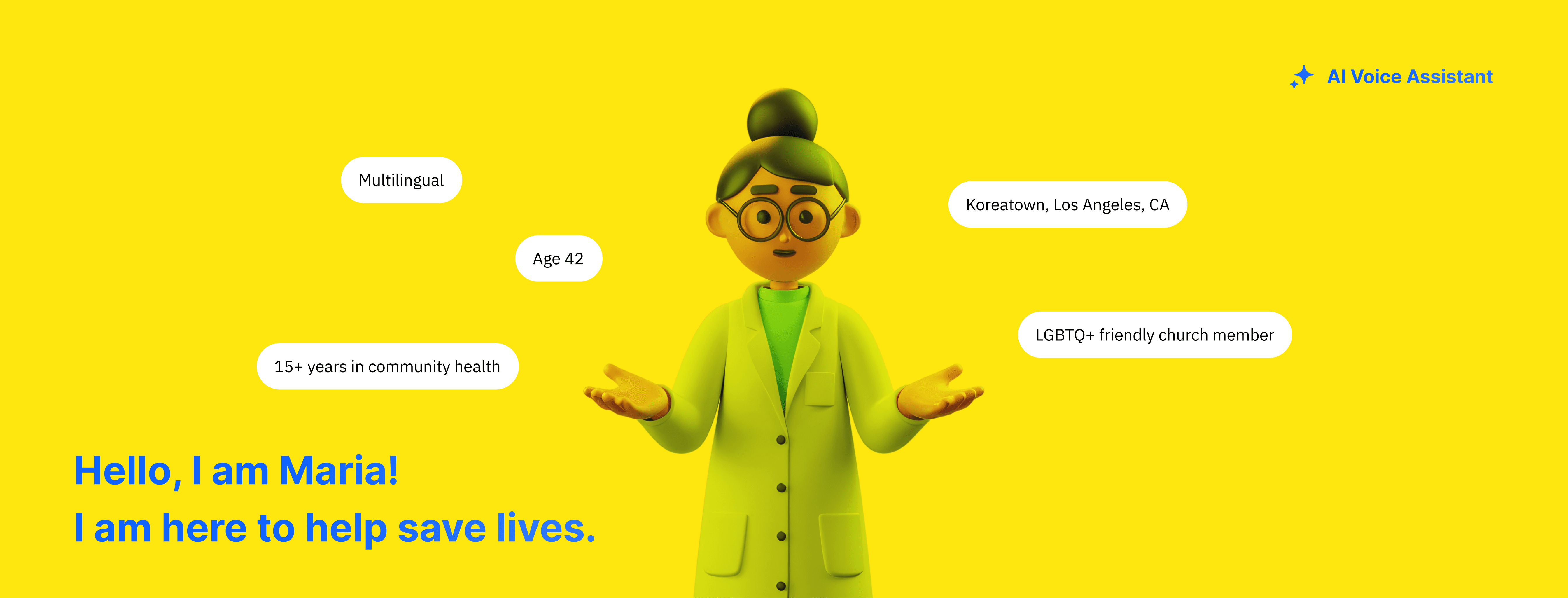
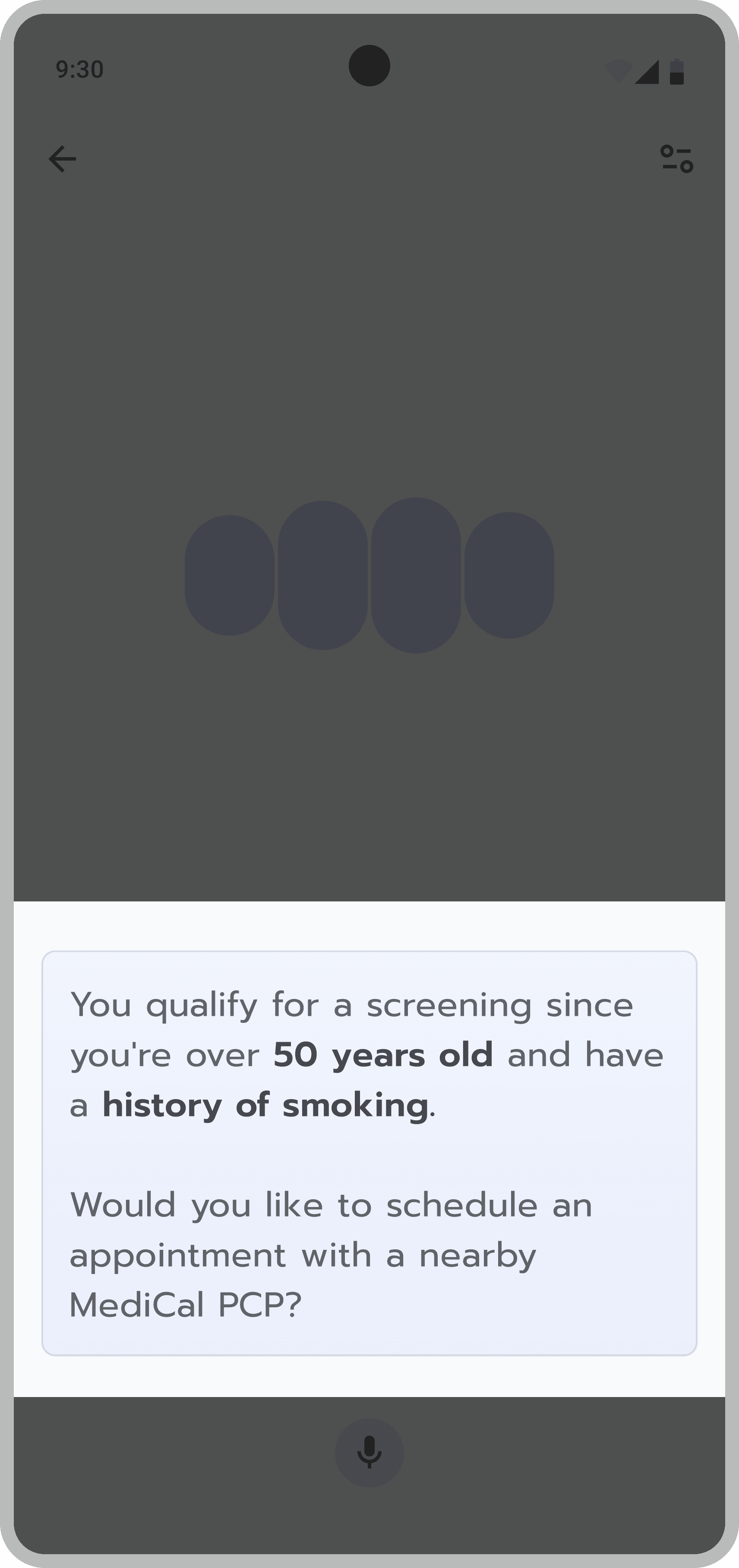
I designed a friendly AI voice assistant modeled after local healthcare providers to simplify medical information, support multiple languages, and build trust by making patients feel safe and heard.
Blue bubbles convey trust, accessibility, and inclusivity, reflecting Maria’s dedication to community health.
Key implementation
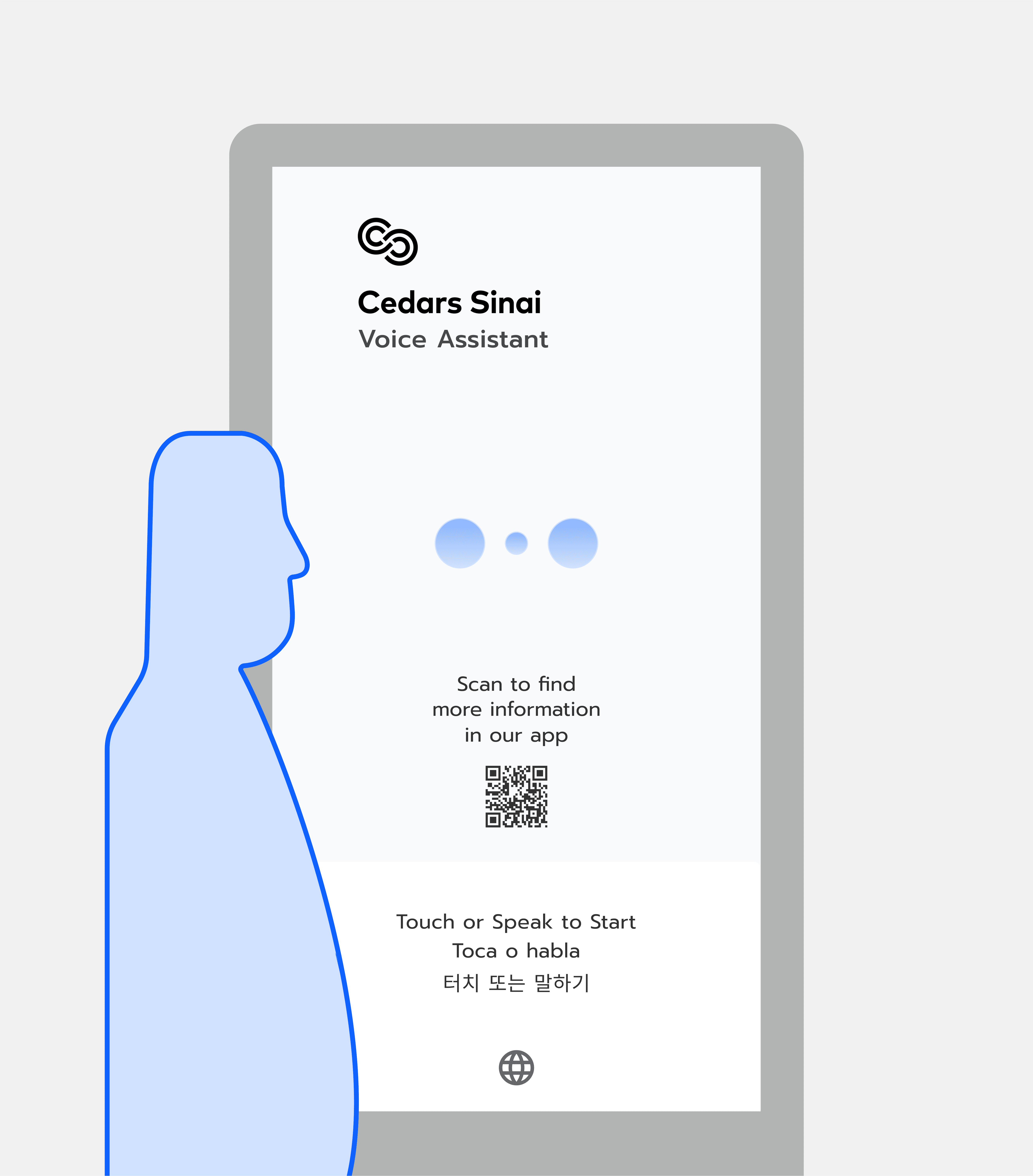
Kiosk and companion app voice user interface
Through research on target users aged 50-80, I found that many rely on public transportation and prefer phone calls over text messages. Given these habits, voice-based interactions were the ideal solution.
Bus station kiosk
Public access to basic screening info and app via QR code
→
↓
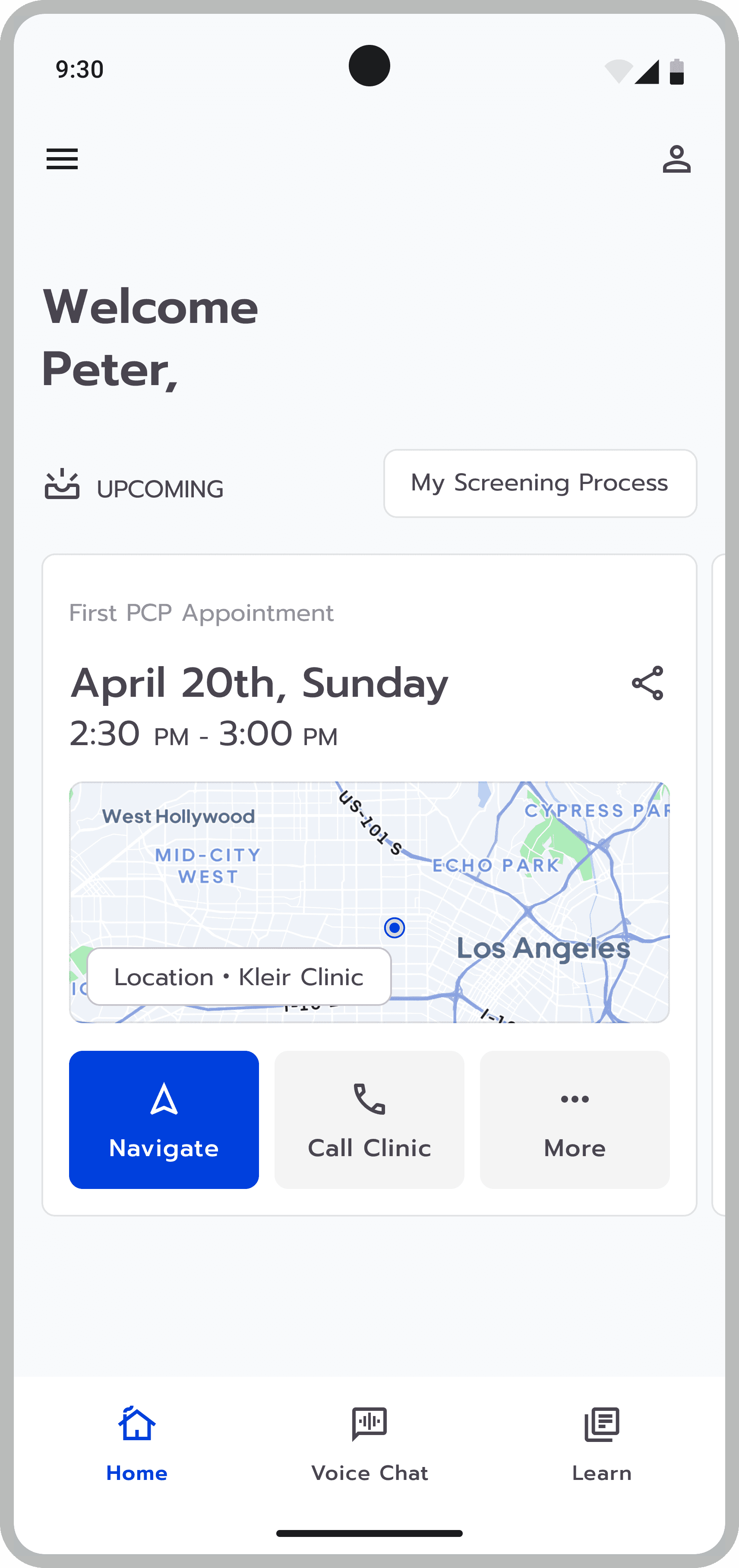
Companion app
Private chat for screening eligibility and easy scheduling
Ensuring accessiblity
Meet ADA requirement and is accessible to all
Solution 02
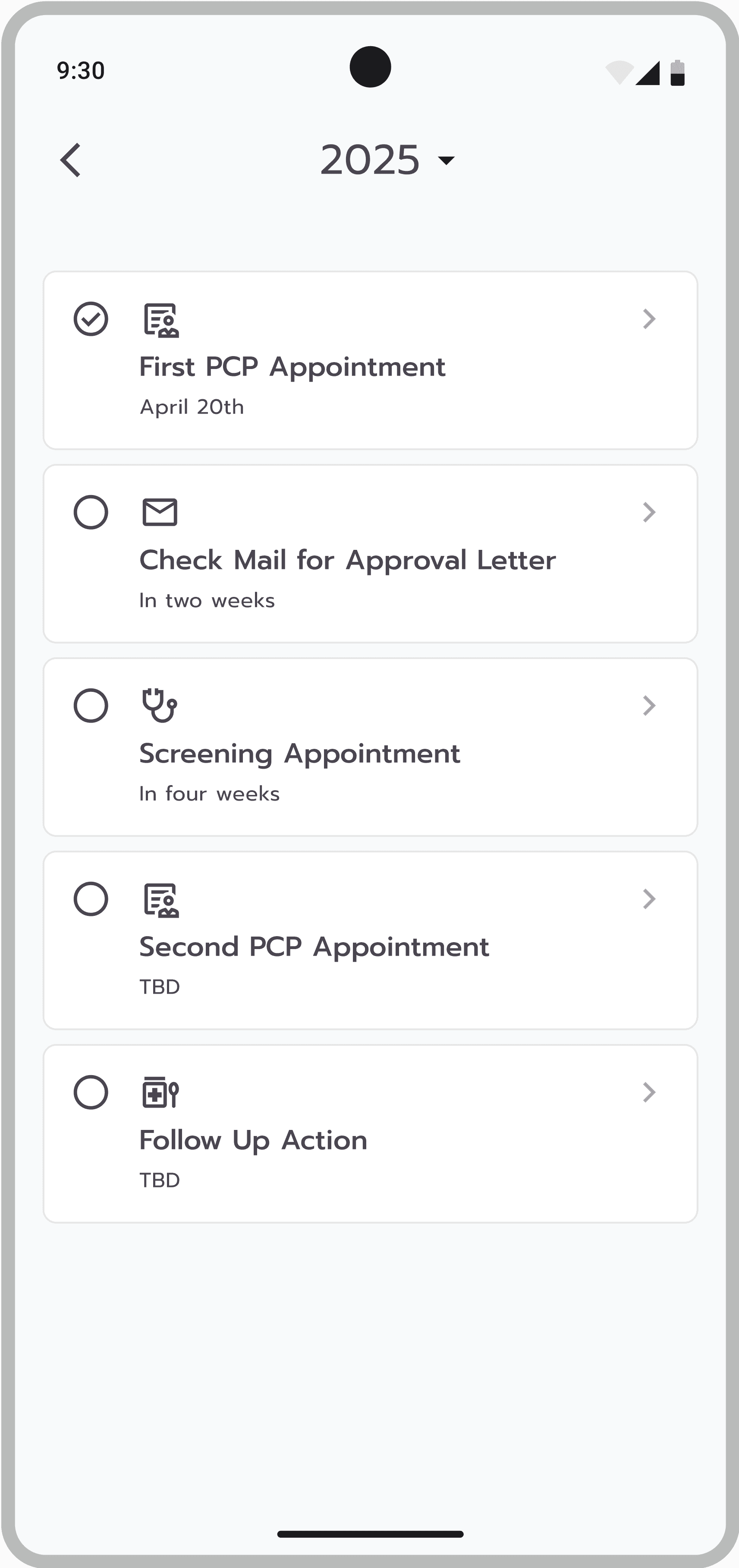
Start your screening journey with step-by-step personalized guidance
Start your screening journey with step-by-step personalized guidance
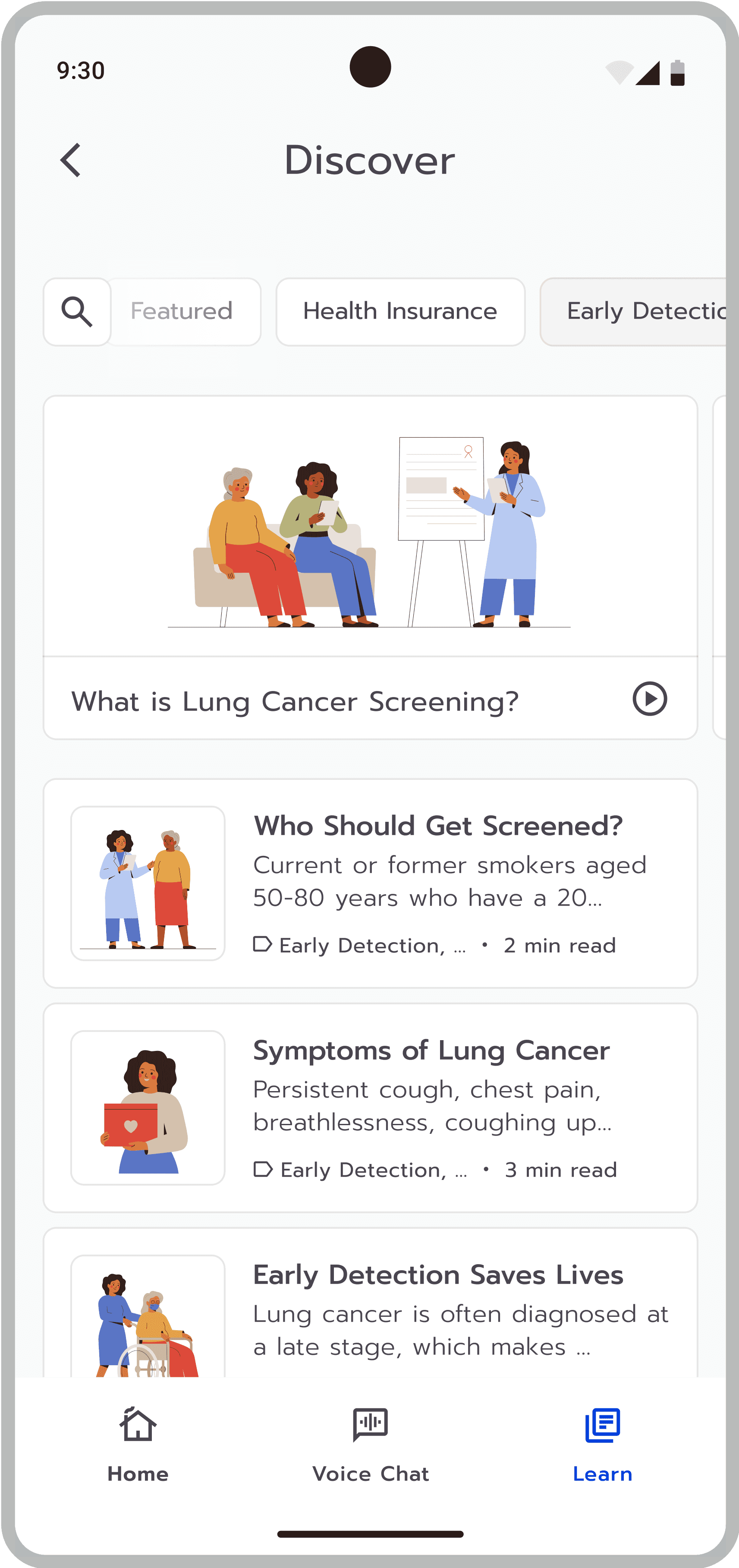
I designed a system to streamline lung cancer screening by helping users schedule appointments, track progress, and access learning resources to reduce drop-offs and improve screening rates.
"How might we develop an efficient system to increase health literacy, and build trust across multiple audiences?”
(Latinx, African American, LGBTQ+, and Korean populations)
Personalized home
Appointment details & notifications
Appointment details
Process checklist
Progress tracking & follow-up
Tracking & follow-up
Learning resources
Early screening & eligibility
Design decision & iteration
I explored solutions through prototyping, usability testing, discussions with stakeholders.
I explored solutions through prototyping, usability testing, discussions with stakeholders.
Mid-fidelity wireframes to final design
Mid-fidelity wireframes
Insight 01
Users are limited to voice-only interactions
Limited to voice-only interactions
Insight 02
Conflicting buttons and binary input options limit interaction
Limited user input, conflicting buttons
Insight 03
The chat box occupies excessive digital real estate
Chat box occupies excessive screen
Final design
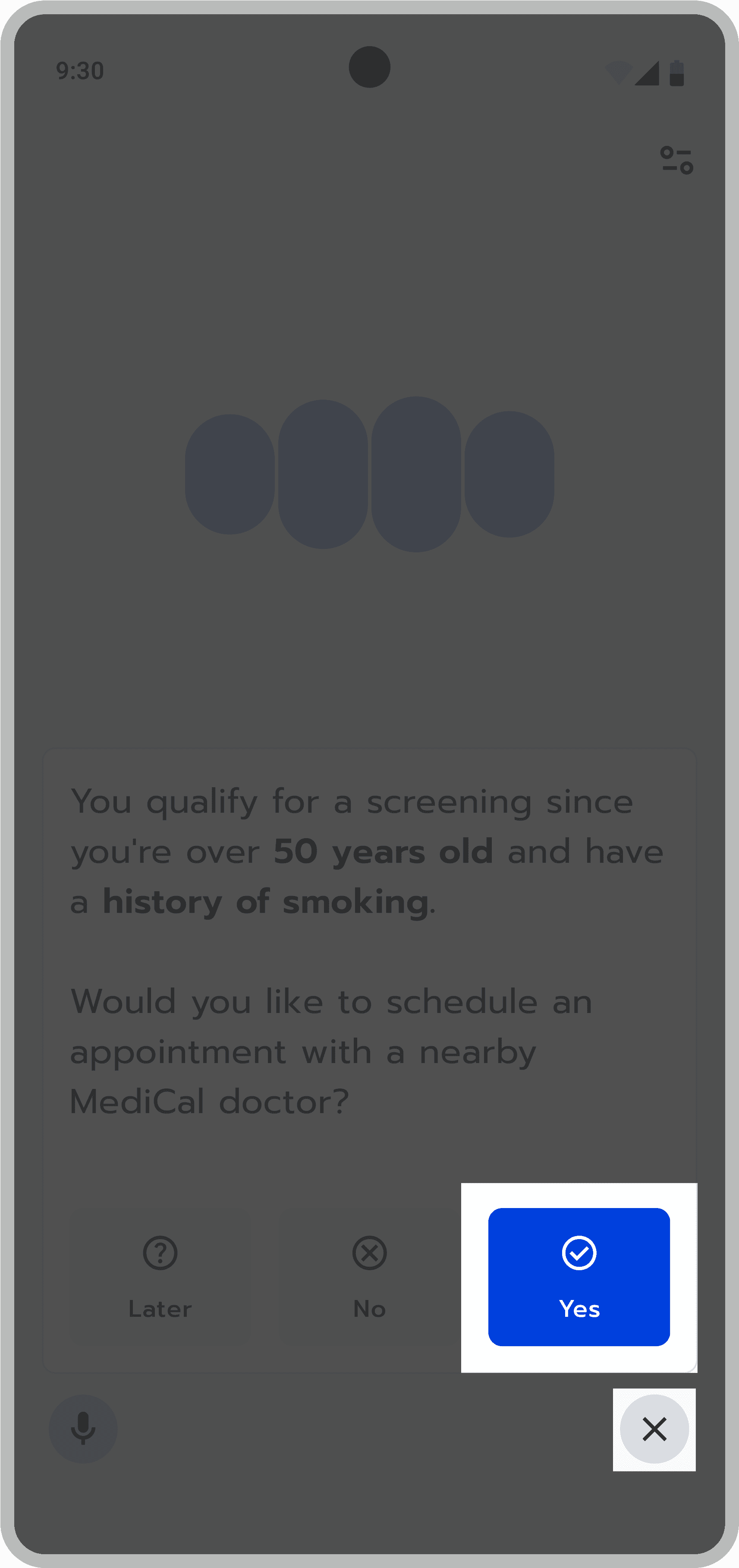
Flexible input with an easy-to-follow chat bubble
Flexible input and easy-to-follow chat
Stakeholder feedback
"We were initially worried about the budget, but voice interface turned out to be a cost-effective solution that breaks down barriers for older adults and non-English speakers throughout their healthcare journey."
Reflection
01
Accessibility and inclusive design
I learn that voice user interface and interaction can help drive accessibility and inclusivity design.
02
The impact of design decisions
I learn how design decisions can impact people’s ability to engage with the world.