Jun '25 - Mar '26
Shipped Q1 2026
Product Designer via Haus
Product Design, Strategy, UI, UX, Prototyping
Owned and designed the end-to-end product experience
Overview
Some details have been generalized and visuals simplified to protect confidential information.
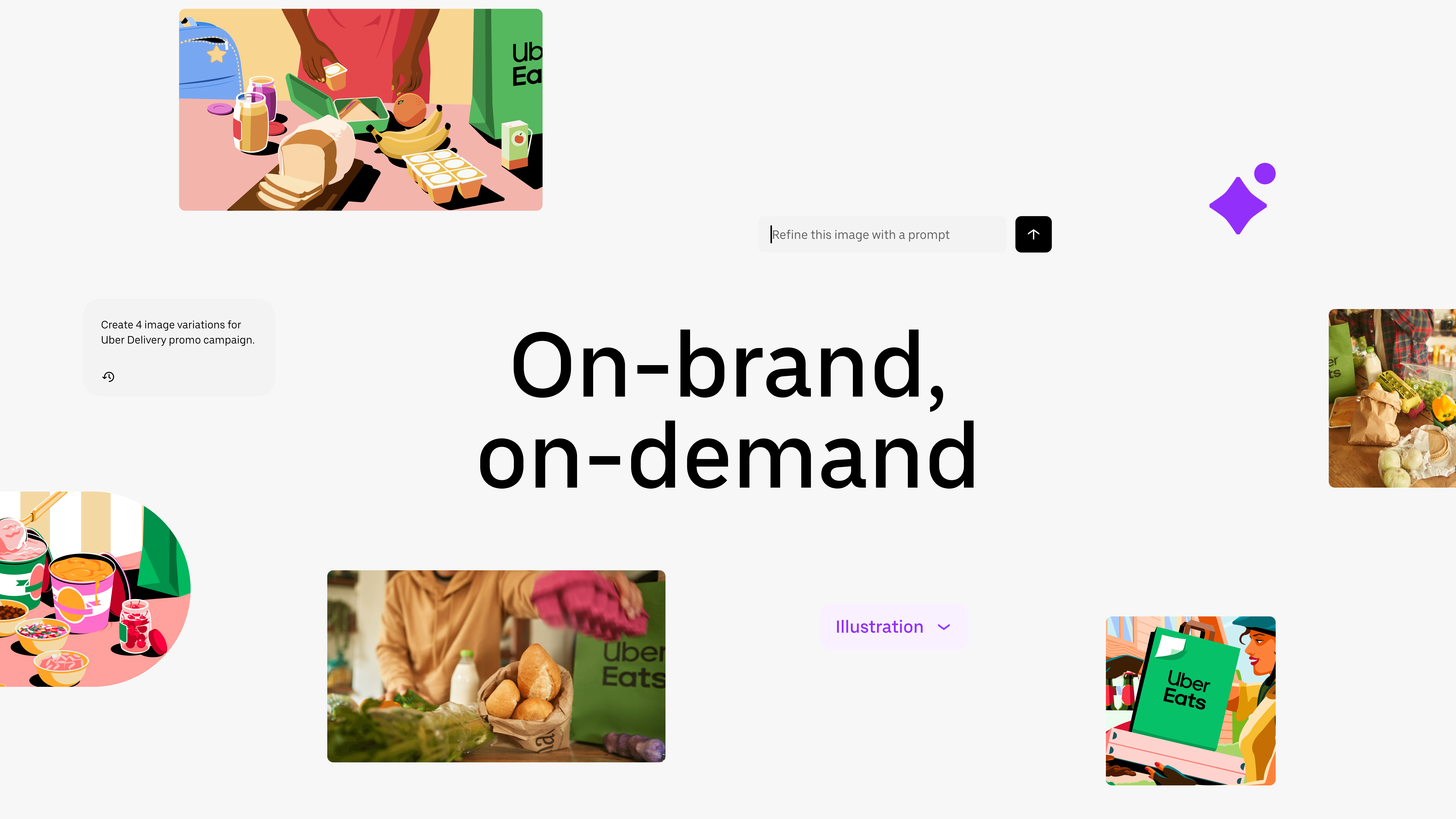
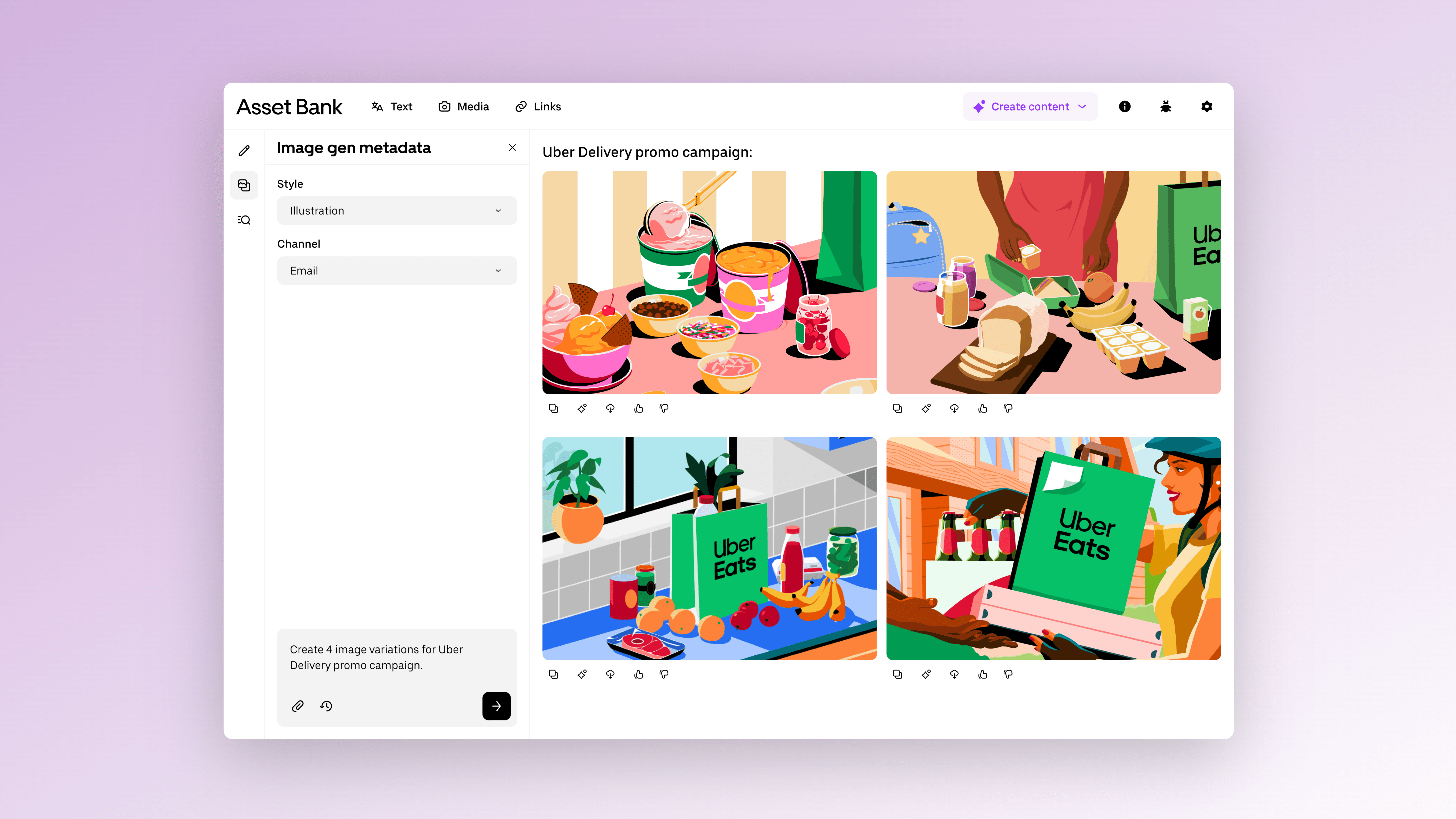
Reduced image turnaround from weeks to minutes by replacing external agency coordination with self-serve AI generation, enabling marketers to create fresh and tailored visuals for every campaign.
01 Prompt-based generation
Describe your idea with just a few words or upload an existing asset to guide AI and create custom images from scratch.
02 Illustration or Photo Realistic
Choose from brand-compliant styles to transform your visuals and match your campaign convincingly.
03 Image iterations
Refine images through natural conversation to remove a logo, change a color, or resize for a different channel without aligning with an agency.
The style selector
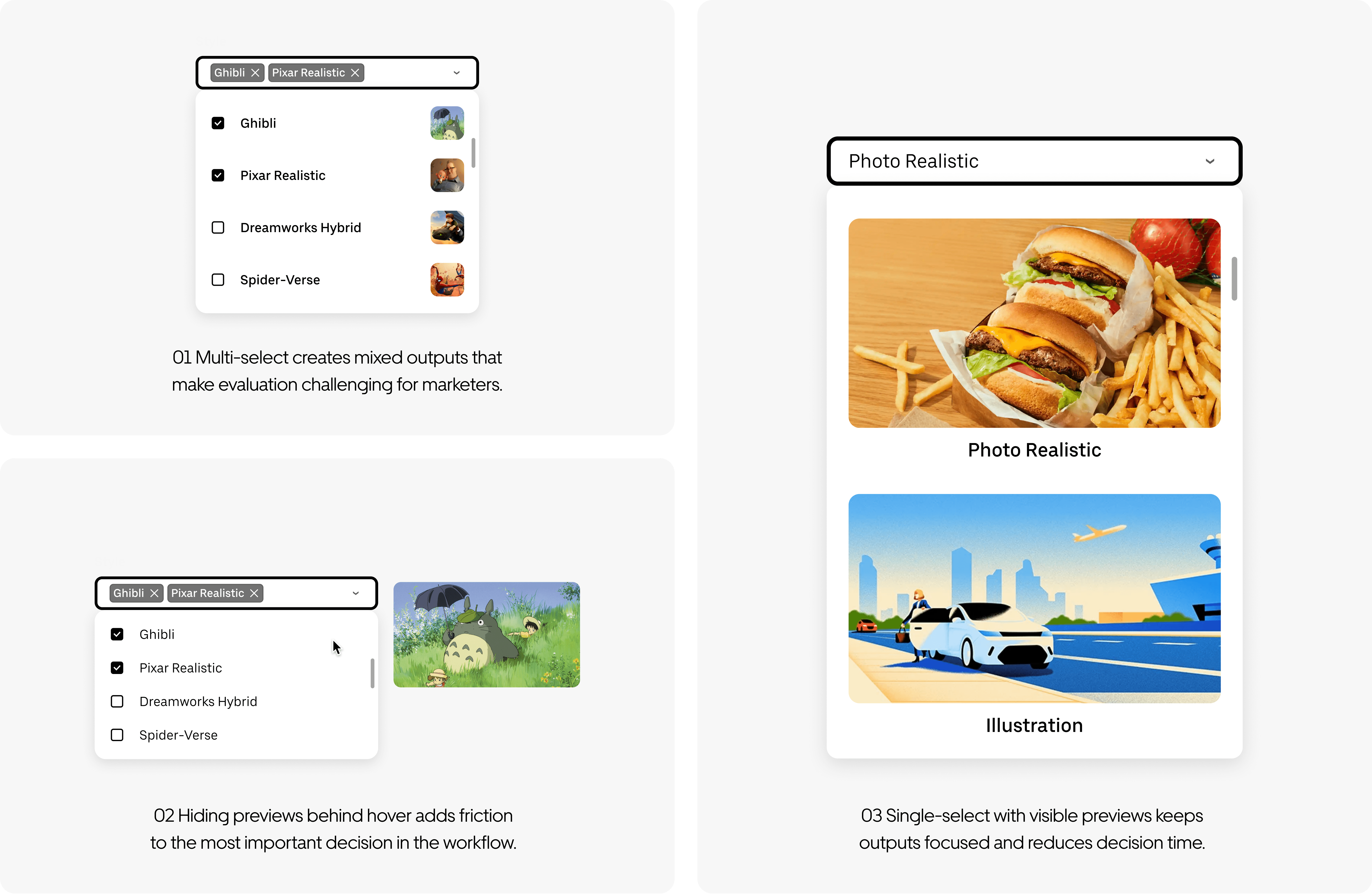
The PM initially proposed multi-select to give marketers more flexibility. I raised a concern that generating multiple styles at once would make outputs harder to evaluate, and engineering confirmed that single-style generation would produce clearer results. I explored three directions and we aligned on single-select with large preview cards to help marketers make confident choices without extra interaction.
Simplify the metadata panel
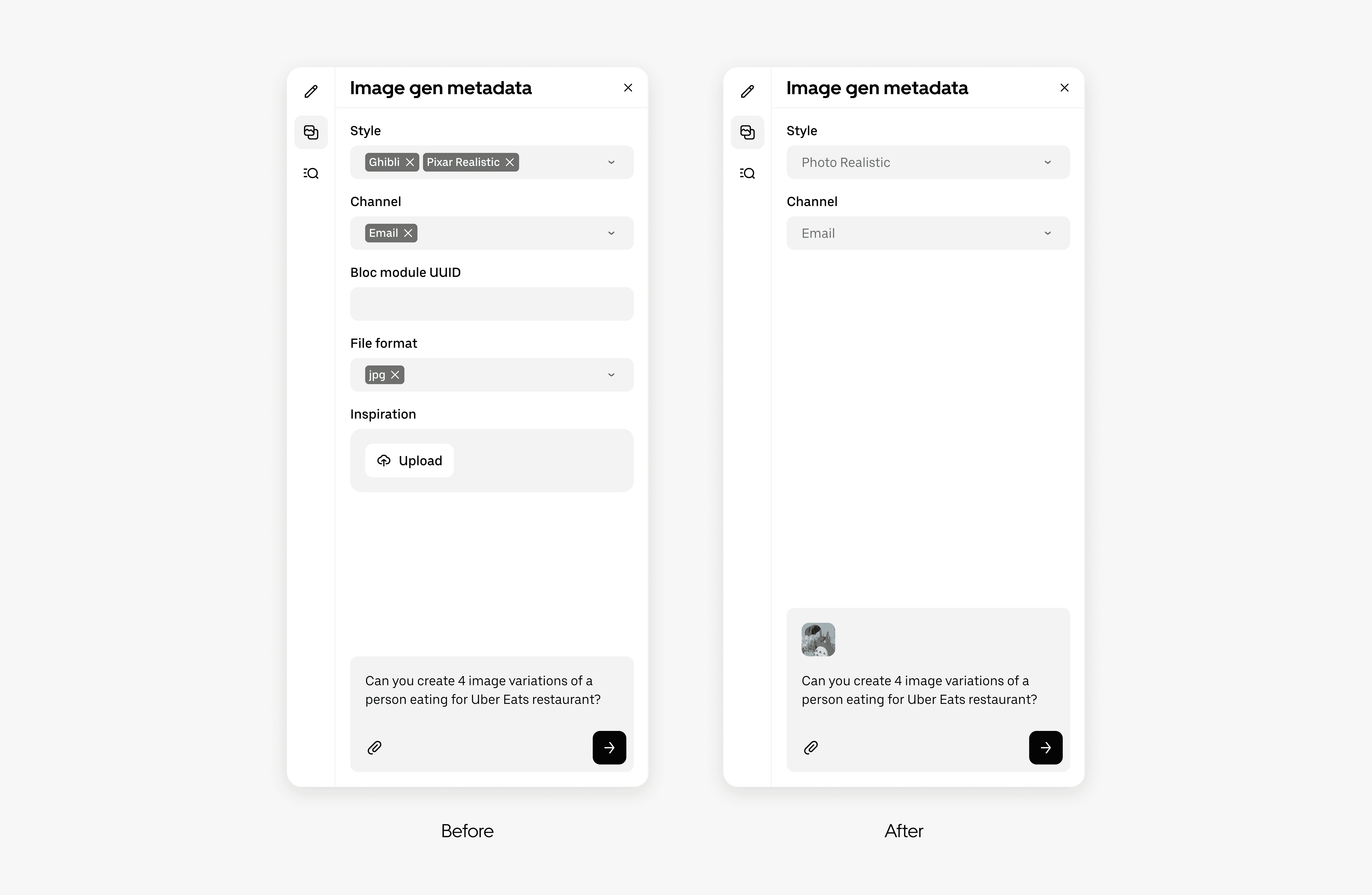
From five fields to two. I removed system IDs and file format for the system to handle automatically, and relocated inspiration upload into the prompt area.
Designing for brand safety
Brand compliance was a core constraint. Curated style options enforce consistency at the point of creation, and a disclaimer reinforces that all generated images still follow the standard approval process. This gave marketers freedom to experiment without bypassing the trust the brand team needed.
Reflection
The core design problem isn't the input or the output but the gap between them. This project taught me to design the bridge that shapes expectations before generation, builds mental models that hold up when results surprise, and makes the next action obvious when they don't. That's where trust is either built or lost.